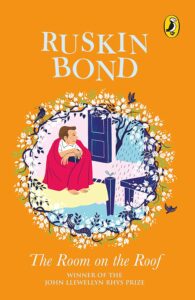
The Room on the Roof
By Ruskin Bond
“A poignant coming-of-age narrative set in the vibrant foothills of the Himalayas, exploring a lonely Anglo-Indian orphan’s quest for independence, love, and belonging amidst the colourful tapestry of Indian life.“
Table of Contents
ToggleOverview
Ruskin Bond’s seminal debut novel, “Room on the Roof,” published when he was just seventeen, offers a tender and evocative portrayal of adolescence, yearning, and the search for identity in post-colonial India.
The narrative centres on Rusty, a sixteen-year-old Anglo-Indian orphan living under the strict guardianship of his British grandfather in the quiet cantonment town of Dehra Dun.
Rusty’s life is one of stifling routine and cultural isolation, marked by his grandfather’s rigid adherence to British customs and his disdain for Indian society.
The novel meticulously charts Rusty’s burgeoning desire for freedom and connection, a yearning that propels him beyond the confines of his grandfather’s bungalow and into the bustling bazaars and vibrant life of the Indian town. His friendships with local boys – the boisterous Somi, the quiet Ranbir, and the mischievous Suri – open up a world of experiences previously denied to him, from cricket matches in dusty fields to shared meals and conversations under the stars. These relationships are pivotal, acting as a bridge between his isolated existence and the rich cultural landscape he longs to embrace.
The titular ‘room on the roof’ becomes a powerful symbol of Rusty’s burgeoning independence and his aspiration for a life of his own. It is a dilapidated, rented space above a bustling bazaar, a sanctuary he painstakingly transforms into his personal haven. This room represents not just physical autonomy but also emotional and spiritual liberation, a place where he can truly be himself, free from the constraints of his past and the expectations of his guardian. The narrative is imbued with Bond’s characteristic lyrical prose, capturing the sensory details of Dehra Dun – the sounds, smells, and sights – with an almost nostalgic reverence, making the setting itself a character in Rusty’s journey of self-discovery and his first, bittersweet encounter with love and loss.
Key Takeaways
The Quest for Independence and Identity
The novel is fundamentally a story about a young man’s arduous journey towards self-discovery and autonomy. Rusty’s escape from his grandfather’s restrictive household and his establishment of the room on the roof symbolise his desperate need to forge his own identity, free from colonial expectations and familial constraints.
His experiences in the bazaar, his friendships, and his first love are all integral to this process, allowing him to understand who he is outside the confines of his upbringing and to embrace a more authentic, Indian-influenced self. This theme resonates with anyone who has yearned for freedom and a place to call their own, both physically and emotionally.
The Power of Friendship and Belonging
Central to Rusty’s transformation are his friendships with Somi, Ranbir, and Suri. These relationships provide him with the companionship, acceptance, and sense of belonging that were conspicuously absent in his grandfather’s home. Through shared adventures, games, and conversations, Rusty learns about loyalty, trust, and the richness of cultural exchange.
These bonds are not merely recreational; they are foundational to his emotional development, offering him a support system and a bridge into the vibrant Indian society he initially felt excluded from. The novel underscores how vital genuine human connection is for personal growth and happiness.
First Love, Loss, and Resilience
Rusty’s tender romance with Meena is a poignant exploration of first love – its intoxicating joy, its inherent vulnerability, and its inevitable pain. Their relationship, though brief and ultimately tragic, is a catalyst for Rusty’s emotional awakening, teaching him about intimacy, desire, and the profound impact of human connection.
Meena’s sudden death introduces Rusty to the harsh realities of loss and grief, forcing him to confront the impermanence of happiness. However, it also highlights his burgeoning resilience, as he learns to navigate sorrow and ultimately chooses to move forward, carrying the lessons of love and loss as part of his evolving identity.
The Symbolism of 'The Room on the Roof'
The titular room is far more than just a physical space; it is a potent symbol of Rusty’s independence, his aspirations, and his burgeoning identity. It represents a sanctuary he creates for himself, a place where he can be truly free from external pressures and define his own existence.
The act of cleaning and furnishing the dilapidated room mirrors Rusty’s internal journey of self-construction and renewal. It is a space of refuge, creativity, and self-possession, embodying the universal human desire for a personal haven where one can dream, grow, and simply ‘be’.
Cultural Bridge and Post-Colonial Identity:
The novel subtly explores themes of cultural identity in post-colonial India. Rusty, as an Anglo-Indian, exists between two worlds – the fading British colonial past represented by his grandfather, and the vibrant, emerging Indian present. His journey is one of bridging this cultural divide, moving away from the isolated British cantonment life towards an embrace of Indian customs, friendships, and experiences. Bond beautifully portrays the sensory richness of Indian life, inviting the reader to experience it through Rusty’s awakening senses, suggesting a harmonious blend of cultures is possible and desirable for a complete sense of self.
Chapter Breakdown
Chapter 1: The Confines of Cantonment Life
The story opens by introducing Rusty, a sixteen-year-old Anglo-Indian orphan, living a rather solitary and regimented life with his strict British grandfather in Dehra Dun. His grandfather, a retired colonialist, maintains a rigid household, enforcing English customs and discouraging Rusty from interacting with the local Indian population. Rusty’s days are monotonous, filled with lessons and chores, and devoid of genuine companionship or adventure. His longing for freedom and a life beyond the garden walls is palpable, a quiet rebellion simmering beneath his compliant exterior.
This initial section establishes Rusty’s profound sense of isolation and his yearning for connection. His grandfather’s stern demeanour and the cultural chasm between them highlight Rusty’s liminal position – neither fully British nor fully Indian. The narrative subtly conveys the oppressive atmosphere of the bungalow, contrasting it with the vibrant, beckoning world of the bazaar just beyond their gates, a world Rusty observes with growing curiosity and a deep sense of exclusion.
Key Points
- Rusty, a sixteen-year-old Anglo-Indian orphan, lives under the strict guardianship of his British grandfather in Dehra Dun.
- His life is characterised by rigid routines, English customs, and a profound lack of freedom and social interaction.
- The initial chapters establish Rusty’s deep-seated yearning for independence and connection with the vibrant Indian world outside his grandfather’s compound.
Chapter 2: Venturing into the Bazaar and New Friendships
Driven by an insatiable curiosity and a desire for companionship, Rusty defies his grandfather’s warnings and ventures into the bustling bazaar. Here, he encounters a world alive with sights, sounds, and smells that captivate his senses and ignite his spirit. He quickly forms friendships with a group of local boys: Somi, the affable and outgoing leader; Ranbir, the quiet and thoughtful wrestler; and Suri, the mischievous and energetic one. These friendships are transformative, offering Rusty his first taste of genuine camaraderie and acceptance.
Through his new friends, Rusty experiences the authentic rhythm of Indian life – playing cricket in dusty fields, sharing simple meals, and exploring hidden corners of the town. These interactions are crucial for his personal growth, as they challenge his preconceived notions and allow him to shed the cultural inhibitions imposed by his grandfather. The bazaar becomes a symbol of liberation, a place where Rusty can truly be himself and forge meaningful bonds that transcend cultural barriers.
Key Points
- Rusty defies his grandfather and explores the vibrant, bustling bazaar, finding it a stark contrast to his home life.
- He forms significant friendships with local boys: Somi, Ranbir, and Suri, who introduce him to authentic Indian life.
- These new relationships provide Rusty with companionship, acceptance, and a sense of belonging he previously lacked.
Chapter 3: The Discovery of the Room and Independence
A pivotal moment arrives when Rusty discovers a small, dilapidated room on the roof of a building in the heart of the bazaar. This room, initially a dusty, forgotten space, immediately captures his imagination. It represents a tangible opportunity for independence, a sanctuary where he can escape his grandfather’s oppressive control and create a life of his own. With the help of his friends, Rusty sets about cleaning and furnishing the room, transforming it into a modest but deeply personal haven.
The acquisition and renovation of the room symbolise Rusty’s active pursuit of autonomy. It is more than just a physical space; it is a declaration of his desire for self-reliance and a place where he can cultivate his own identity, free from external impositions. This act of creating his own home marks a significant step in his coming-of-age journey, providing him with a base from which to explore his burgeoning sense of self and the world around him.
Key Points
- Rusty discovers a small, neglected room on the roof of a building in the bazaar, which becomes a symbol of his independence.
- He decides to rent the room, seeing it as an escape from his grandfather’s control and a chance to live on his own terms.
- With the help of his friends, Rusty cleans and furnishes the room, transforming it into his personal sanctuary and a declaration of self-reliance.
Chapter 4: First Love and Heartbreak
Living in his room on the roof, Rusty’s life takes on new dimensions. He meets Meena, the young, beautiful, and unhappily married wife of his landlord, Mr. Kapoor. A tender and innocent romance blossoms between them, a bittersweet first love that is both exhilarating and fraught with unspoken dangers. Meena represents a profound emotional connection for Rusty, a source of warmth and affection he has never known. Their clandestine meetings and shared moments are imbued with a delicate intimacy, highlighting Rusty’s emotional awakening.
However, their brief idyll is tragically cut short. Meena dies in a car accident, a devastating blow that shatters Rusty’s nascent happiness and introduces him to the harsh reality of loss and grief. This experience profoundly impacts Rusty, forcing him to confront the fragility of life and the pain of heartbreak at a young age. The loss of Meena marks a significant turning point, deepening his understanding of human emotion and the complexities of relationships.
Key Points
- Rusty falls in love with Meena, the young, unhappily married wife of his landlord, experiencing his first profound emotional connection.
- Their tender, clandestine romance is a source of joy and emotional awakening for Rusty, but also carries an underlying tension.
- Meena’s tragic death in a car accident devastates Rusty, introducing him to the profound pain of loss and shaping his understanding of love and life’s impermanence.
Chapter 5: The Aftermath and New Beginnings
Following Meena’s death, Rusty is consumed by grief and a profound sense of emptiness. The vibrant world he had begun to embrace now feels shadowed by loss. His grandfather, upon learning of Rusty’s independent life and his involvement with Meena, is furious, leading to a final, irreparable rift between them. Rusty is effectively disowned, severing his last ties to his old life and forcing him to confront a future entirely of his own making.
Despite the pain, Rusty finds solace in his friendships and the resilience of his spirit. He decides to leave Dehra Dun, embarking on a journey to explore other parts of India, seeking new experiences and a fresh start. This decision, though born of sorrow, signifies his ultimate acceptance of independence and his readiness to face the world alone. The novel concludes with Rusty, now truly an adult, looking towards an uncertain but hopeful future, carrying the lessons of love, loss, and friendship with him.
Key Points
- Meena’s death leaves Rusty heartbroken and leads to a final, irreparable estrangement from his grandfather.
- Disowned and alone, Rusty finds strength in his friendships and his own resilience.
- He decides to leave Dehra Dun to explore other parts of India, embracing his independence and looking towards a future shaped by his own choices and experiences.
Conclusion
Ruskin Bond’s “Room on the Roof” stands as a timeless classic of adolescent literature, a tender and evocative exploration of the universal themes of independence, friendship, and first love. Its enduring appeal lies in Bond’s masterful ability to craft a narrative that is both deeply personal and universally resonant, capturing the delicate nuances of a young boy’s journey into manhood amidst the vibrant backdrop of Dehra Dun. The novel’s strength is not just in its compelling plot but in its lyrical prose, which imbues the setting with a palpable sense of place and atmosphere, making the reader feel the dust of the bazaar and the warmth of the Indian sun.
Critically, the book is celebrated for its authenticity and its gentle yet profound insights into the human condition. Bond’s portrayal of Rusty’s emotional landscape – his loneliness, his yearning, his joy, and his grief – is handled with a sensitivity that belies the author’s youth at the time of writing. It is a novel that speaks to the heart, reminding us of the transformative power of connection and the bittersweet beauty of growing up.
“Room on the Roof” is more than just a story; it is an experience, a nostalgic journey into a world where innocence meets experience, and where the search for a place to belong ultimately leads to the discovery of oneself. It remains a cherished work, a testament to the enduring power of simple storytelling and profound human emotion, cementing Bond’s reputation as a beloved chronicler of Indian life and childhood.