The Picture of Dorian Gray
by Oscar Wilde
“A Faustian tale of eternal youth and beauty, where a man’s soul is corrupted and reflected in a hidden portrait, revealing the devastating cost of a life lived without moral consequence.”
Table of Contents
ToggleOverview
Oscar Wilde’s singular novel, “The Picture of Dorian Gray,” published in its final form in 1891, stands as a seminal work of Aestheticism and a profound exploration of morality, beauty, and the human soul.
Set against the opulent backdrop of fin-de-siècle London, the narrative plunges into the life of the exquisitely handsome Dorian Gray, an innocent young man whose life is irrevocably altered by a fateful wish.
At its core, the novel is a philosophical fable, a dark reimagining of the Faust legend, where the protagonist trades his soul not for knowledge or power, but for perpetual youth and beauty.
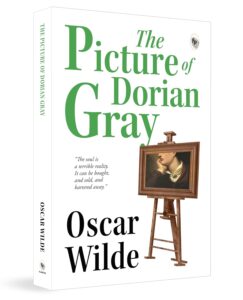
The catalyst for this transformation is a portrait painted by the devoted artist Basil Hallward, who captures Dorian’s youthful perfection with an almost spiritual reverence. It is the cynical, witty, and profoundly influential Lord Henry Wotton, however, who plants the seeds of corruption in Dorian’s mind, advocating a philosophy of hedonism, self-indulgence, and the pursuit of beauty above all else.
As Dorian succumbs to Lord Henry’s intoxicating worldview, he expresses a desperate wish: that the portrait might bear the burden of age and sin, allowing him to remain eternally youthful and unblemished. This wish is miraculously granted, setting in motion a terrifying descent into moral depravity. The novel meticulously charts Dorian’s journey from a naive youth to a hardened, callous individual, whose outward perfection belies the grotesque decay of his hidden soul, visibly manifested in the increasingly hideous and disfigured portrait.
Wilde uses the narrative to critique Victorian society’s hypocrisy, its obsession with appearances, and the dangers of a life devoid of genuine empathy or moral compass. The book was met with outrage upon its initial publication, condemned for its perceived immorality and decadent themes, yet it has endured as a masterpiece, celebrated for its exquisite prose, psychological depth, and enduring relevance in examining the eternal conflict between art and life, beauty and virtue, and the profound consequences of one’s choices.
Key Takeaways
Aestheticism vs. Morality
The novel is a profound exploration of the Aesthetic movement’s tenets, particularly the idea of ‘art for art’s sake’ and the pursuit of beauty above all else. Wilde, a leading figure of Aestheticism, uses Dorian’s story to critique the potential dangers of divorcing art and beauty from moral considerations.
Lord Henry’s philosophy, which champions sensation and experience over ethical conduct, ultimately leads to Dorian’s destruction, suggesting that a life devoid of moral compass, however aesthetically pleasing, is ultimately self-destructive.
The portrait itself embodies this conflict, initially a work of pure beauty, it becomes a grotesque moral ledger, demonstrating that art can indeed reflect and be tainted by life’s ugliness, despite the aesthetic ideal.
The Corrupting Influence of Hedonism
Dorian Gray’s journey is a cautionary tale about the corrupting power of unchecked hedonism and the pursuit of pleasure without consequence. Influenced by Lord Henry’s seductive rhetoric, Dorian dedicates his life to gratifying his senses and indulging in every vice, believing his outward beauty will shield him from the repercussions.
However, the novel vividly illustrates that true beauty cannot exist without a corresponding inner virtue. Each act of cruelty, selfishness, or depravity leaves its mark not on Dorian’s face, but on his soul, as reflected in the increasingly hideous portrait.
This highlights the idea that a life lived solely for self-gratification ultimately leads to spiritual decay and profound unhappiness, regardless of superficial appearances.
The Nature of Art and Life
Wilde masterfully uses the magical portrait to explore the complex relationship between art and life. Initially, the portrait is a perfect representation of Dorian’s innocent beauty, a testament to Basil’s artistic devotion.
However, it transcends mere representation to become a living, breathing manifestation of Dorian’s soul, bearing the weight of his sins and the passage of time. This blurs the lines between art and reality, suggesting that art can hold a deeper truth than superficial appearances.
The portrait serves as Dorian’s conscience, a silent witness to his degradation, and ultimately, the instrument of his downfall. In the end, when Dorian attempts to destroy the portrait, he destroys himself, while the art, having borne his burden, returns to its original, untainted beauty, implying art’s enduring purity and power over transient human life.
The Burden of Conscience and Secrecy
Dorian’s pact with the portrait grants him the illusion of freedom from consequence, allowing him to commit heinous acts without visible societal repercussions.
However, this freedom comes at a terrible cost: the burden of a guilty conscience and the psychological torment of his secret. The hidden portrait becomes his constant tormentor, a physical manifestation of his decaying soul that he must conceal at all costs.
The secrecy isolates him, breeding paranoia and a profound sense of self-loathing. Despite his outward charm and social standing, Dorian lives a life of profound inner misery, demonstrating that escaping external judgment does not equate to escaping internal condemnation. The novel argues that true peace can only be found through acknowledging and atoning for one’s sins, rather than merely hiding them.
Chapter Breakdown
Chapter 1: The Genesis of the Portrait and the Pact
The novel opens in the lush, fragrant studio of Basil Hallward, an artist deeply enamoured with his latest sitter, the extraordinarily beautiful Dorian Gray. Basil confides in his friend, the cynical and eloquent Lord Henry Wotton, that Dorian has become his muse, the very embodiment of his artistic ideal, and that he fears the corrupting influence of the world upon such perfection. Lord Henry, a master of paradox and epigram, immediately takes a keen interest in Dorian, seeing in his innocence a canvas for his own hedonistic philosophies.
During a sitting, Lord Henry engages Dorian in a captivating discourse on the fleeting nature of youth and beauty, urging him to embrace every sensation and live life to the fullest, free from conventional morality. This conversation profoundly disturbs Dorian, who, upon seeing Basil’s finished portrait of his youthful self, is struck by its exquisite beauty and the cruel realisation that it will remain eternally young while he himself will age and decay. In a moment of intense despair and vanity, Dorian utters a desperate wish: that the portrait might bear the burden of his years and sins, allowing him to retain his youthful perfection forever.
This wish, seemingly a fleeting fancy, sets the supernatural premise of the novel. Basil, disturbed by Lord Henry’s influence and Dorian’s sudden melancholy, attempts to destroy the painting, but Dorian prevents him. The portrait, now imbued with a dark, magical power, becomes a mirror of Dorian’s soul, destined to reflect every moral transgression and the passage of time, while Dorian’s physical form remains untouched.
Key Points
- Basil Hallward’s artistic obsession with Dorian Gray’s beauty is introduced, alongside his apprehension about the world’s corrupting influence.
- Lord Henry Wotton’s cynical, hedonistic philosophy is first articulated, profoundly impacting the impressionable Dorian Gray.
- Dorian’s fateful wish for the portrait to age and bear the marks of his sins, while he remains eternally youthful, establishes the novel’s supernatural core.
Chapter 2: Sybill Vane and the First Stain
Dorian, under Lord Henry’s increasing sway, embarks on a passionate, albeit superficial, romance with Sybill Vane, a young, talented actress from a working-class theatre. He is captivated not by Sybill herself, but by her ability to embody various heroines on stage, seeing her as a living work of art. He declares his love and proposes marriage, much to the amusement of Lord Henry and the concern of Basil.
However, Sybill’s love for Dorian proves to be her undoing. Overwhelmed by real emotion, she loses her ability to act, finding the stage world hollow in comparison to her genuine feelings. During a performance attended by Dorian, Lord Henry, and Basil, her acting is disastrously poor. Disgusted by her failure to maintain the illusion of art, Dorian cruelly rejects her, telling her she has murdered his love and that he can no longer marry her.
Upon returning home, Dorian notices the first subtle change in his portrait: a faint sneer has appeared on the lips, and a hint of cruelty in the eyes. This horrifying revelation confirms his wish has been granted. He resolves to reconcile with Sybill, but it is too late; Lord Henry informs him that Sybill, heartbroken, has committed suicide. Dorian, initially distraught, is quickly persuaded by Lord Henry to view Sybill’s death as a tragic, beautiful artistic gesture, rather than a moral failing on his part. He decides to hide the portrait, now bearing the full weight of his cruelty towards Sybill, in a disused schoolroom, beginning his life of secret depravity.
Key Points
- Dorian’s infatuation with Sybill Vane is driven by her artistic talent, not genuine affection, reflecting his superficial values.
- Sybill’s tragic suicide, prompted by Dorian’s cruel rejection, marks the first significant moral transgression that visibly alters the portrait.
- The portrait’s initial transformation confirms the supernatural pact, leading Dorian to conceal it and embrace a life of hidden vice.
Chapter 3: The Yellow Book and Deeper Corruption
Following Sybill’s death, Dorian fully embraces Lord Henry’s philosophy, dedicating himself to the pursuit of pleasure and sensation. Lord Henry gifts him a mysterious yellow-bound French novel, which becomes a profound influence on Dorian, serving as a guide to a life of aesthetic indulgence and moral ambiguity. The book, implicitly Joris-Karl Huysmans’ *À rebours* (Against Nature), describes the decadent life of a Parisian aesthete, further cementing Dorian’s path towards hedonism and self-gratification.
Years pass, and Dorian’s reputation among London society becomes increasingly tarnished. Whispers of his scandalous behaviour, his corrupting influence on others, and his frequenting of opium dens and disreputable establishments circulate, yet his youthful appearance remains miraculously untouched. He becomes a figure of fascination and fear, his outward beauty a stark contrast to the growing ugliness of his secret life.
He frequently visits the hidden portrait, which now bears the full, horrifying record of his moral decay. Each visit is a morbid ritual, a confrontation with his true self, which has become a grotesque parody of the innocent youth Basil painted. The portrait serves as both a source of terror and a perverse validation, allowing him to indulge in vice without visible consequence, while simultaneously reminding him of the soul he has sacrificed.
Key Points
- Lord Henry’s gift of a ‘yellow book’ profoundly influences Dorian, guiding him further into a life of aesthetic indulgence and moral corruption.
- Dorian’s reputation becomes increasingly scandalous over the years, yet his physical beauty remains miraculously preserved, creating a stark contrast.
- The hidden portrait continues to degrade, becoming a horrifying visual record of Dorian’s escalating moral decay and a constant, tormenting reminder of his lost innocence.
Chapter 4: Basil’s Confrontation and Murder
On the eve of his departure for Paris, Basil Hallward visits Dorian, deeply troubled by the persistent rumours surrounding his former muse. Basil expresses his profound concern for Dorian’s soul, pleading with him to repent and change his ways. He reminds Dorian of the pure, innocent image he once painted, lamenting how far he has fallen from that ideal. Dorian, however, remains outwardly impassive, hardened by years of sin.
Driven by a perverse desire to shock Basil and perhaps to share the burden of his secret, Dorian leads the artist to the locked schoolroom where the portrait is hidden. He unveils the painting, revealing its monstrous transformation: a hideous, decaying visage, dripping with blood and corruption, a true reflection of Dorian’s blackened soul. Basil is utterly horrified, recognising the portrait as a blasphemous perversion of his art and a terrifying testament to Dorian’s depravity.
In a fit of rage and fear, fearing that Basil might expose his secret, Dorian seizes a knife and brutally murders the artist. The act is impulsive and savage, a definitive plunge into irreversible evil. The murder is not only a physical act but a symbolic one, destroying the last vestige of innocence and artistic purity connected to Dorian’s past.
Key Points
- Basil Hallward confronts Dorian about his scandalous reputation, expressing deep concern for his moral state and urging him to reform.
- Dorian reveals the grotesque, corrupted portrait to Basil, horrifying the artist with the visual evidence of his depravity.
- In a moment of panic and rage, Dorian murders Basil Hallward, sealing his fate and plunging him deeper into an abyss of sin.
Chapter 5: The Cover-up and James Vane’s Pursuit
Immediately after the murder, Dorian’s primary concern is to dispose of Basil’s body and erase all evidence of the crime. He blackmails an old acquaintance, Alan Campbell, a brilliant chemist with a dark secret in his past, into dissolving Basil’s body with nitric acid. Campbell, initially horrified and resistant, is ultimately forced to comply under Dorian’s chilling threat of exposure, demonstrating Dorian’s absolute ruthlessness and manipulative power.
With Basil’s disappearance attributed to his sudden departure for Paris, Dorian believes himself safe. However, a new threat emerges in the form of James Vane, Sybill’s brother. James, a sailor, has spent years abroad, but the memory of his sister’s tragic death and his vow of revenge against “Prince Charming” has never faded. He returns to London, relentlessly searching for the man who ruined Sybill’s life.
James Vane’s pursuit adds a layer of suspense and external consequence to Dorian’s otherwise insulated life of sin. He stalks Dorian, almost catching him in an opium den, but Dorian’s eternally youthful appearance saves him, as James initially dismisses him as too young to be the man he seeks. The encounter, however, leaves Dorian deeply shaken, introducing a palpable sense of paranoia and the inescapable shadow of his past.
Key Points
- Dorian blackmails Alan Campbell into dissolving Basil Hallward’s body, showcasing his cold-blooded ruthlessness and control.
- James Vane, Sybill’s brother, returns to London, driven by a relentless desire to avenge his sister’s death.
- Dorian’s youthful appearance initially saves him from James Vane’s pursuit, but the encounter leaves him with a profound sense of paranoia and the looming threat of discovery.
Chapter 6: The Country Estate and the Final Confrontation
Dorian retreats to his country estate, Selby Royal, attempting to escape the growing weight of his conscience and the fear of James Vane. He hosts a shooting party, but the festivities are marred by a chilling incident: a man is accidentally shot and killed during a hunt. To Dorian’s horror, the victim is identified as James Vane, who had been lurking in the thickets, still pursuing his revenge. This accidental death, though a relief, further darkens Dorian’s soul, as he realises the extent to which his past actions continue to haunt him.
Despite the removal of this immediate threat, Dorian finds no peace. The constant fear of exposure, the memory of his crimes, and the grotesque image of the portrait gnaw at his sanity. He attempts to convince himself that he desires to reform, that he has performed a good deed by sparing a young woman from his corrupting influence, but even this act is tainted by self-serving motives and a desire to cleanse the portrait.
Lord Henry, ever the detached observer, continues to visit, oblivious to the true depths of Dorian’s depravity, yet subtly aware of the profound change in his friend. Their conversations highlight the chasm between Dorian’s outward charm and his inner torment, as Lord Henry’s witty cynicism now seems hollow and inadequate against the backdrop of Dorian’s genuine suffering.
Key Points
- James Vane is accidentally killed during a shooting party at Dorian’s country estate, providing a temporary reprieve but deepening Dorian’s moral burden.
- Dorian’s attempts at self-deception and feigned redemption are revealed as superficial, driven by a desire to alleviate his own torment rather than genuine remorse.
- Lord Henry’s continued presence underscores the intellectual and moral distance between his detached philosophy and the real-world consequences of Dorian’s actions.
Chapter 7: The Attempted Redemption and the End
Tormented by his conscience and the ever-present horror of the portrait, Dorian resolves to destroy the painting, believing that by doing so, he can erase his past and achieve redemption. He convinces himself that the portrait is the source of his evil, rather than a mere reflection of it, and that its destruction will free him from his sins. He retrieves the knife he used to murder Basil Hallward, intending to stab the canvas.
In a final, desperate act, Dorian plunges the knife into the portrait. A terrible cry is heard from the locked room, followed by a crash. His servants, alarmed, break down the door to find a startling scene: the portrait on the wall has miraculously returned to its original, pristine state, depicting Dorian as the beautiful, innocent youth Basil had first painted.
On the floor, however, lies the body of an old man, withered, wrinkled, and hideous, with a knife plunged into his heart. It is only by his rings that the servants can identify him as Dorian Gray. In attempting to destroy the record of his soul, Dorian has inadvertently destroyed himself, transferring all the accumulated ugliness and age back to his own body, while the art, untainted by his moral decay, remains eternally beautiful.
Key Points
- Dorian, believing the portrait to be the source of his evil, attempts to destroy it with the same knife he used to murder Basil Hallward.
- Upon the portrait’s destruction, a terrible cry is heard, and the painting miraculously reverts to its original, beautiful state.
- Dorian’s body is found on the floor, transformed into a hideous, aged corpse, revealing that he has transferred the accumulated decay of his soul back to himself, while the art remains pure.
Conclusion
Oscar Wilde’s “The Picture of Dorian Gray” remains an enduring masterpiece, a chilling and exquisitely crafted exploration of beauty, morality, and the human soul. Upon its initial publication, it ignited a firestorm of controversy, condemned by critics as immoral and decadent, yet it has since been recognised as a profound work of literature that challenged Victorian sensibilities and delved into the darker recesses of human nature with unparalleled wit and psychological insight.
The novel’s lasting impact lies in its timeless themes: the corrupting influence of unchecked hedonism, the deceptive nature of appearances, and the inescapable burden of conscience. Wilde’s brilliant use of the supernatural portrait serves not merely as a plot device, but as a powerful metaphor for the soul itself, a silent, suffering witness to a life of sin. The exquisite prose, replete with Wilde’s characteristic epigrams and paradoxes, elevates the narrative beyond a simple cautionary tale, transforming it into a sophisticated philosophical inquiry into the nature of good and evil.
Ultimately, “The Picture of Dorian Gray” stands as a powerful indictment of superficiality and a testament to the idea that true beauty must encompass both the aesthetic and the ethical. Dorian’s tragic end serves as a stark reminder that one cannot escape the consequences of one’s actions indefinitely, and that the pursuit of eternal youth and pleasure at the expense of one’s soul leads only to a grotesque and horrifying demise. It is a novel that continues to provoke thought and discussion, cementing its place as a cornerstone of English literature and a testament to Wilde’s genius.