Middlemarch
by George Eliot
“A panoramic and profound ‘study of provincial life’ in 19th-century England, exploring the intricate web of human relationships, ambition, and disillusionment within a complex social tapestry.”
Table of Contents
ToggleOverview
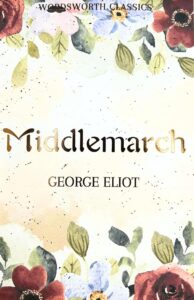
George Eliot’s ‘Middlemarch’ stands as a monumental achievement in Victorian literature, a sprawling and meticulously crafted novel subtitled ‘A Study of Provincial Life’. Published serially between 1871 and 1872, it offers a panoramic view of a fictional English market town, Middlemarch, during the reform era of the 1830s.
The novel delves into the lives of numerous characters, intertwining their fates and aspirations within a richly detailed social and historical context, examining the forces that shape individual destinies and the collective consciousness of a community.
At its heart, ‘Middlemarch’ explores the profound disjunction between noble aspirations and the often-mundane realities of life, particularly focusing on the limitations imposed upon women in the 19th century. The narrative primarily follows two central figures: Dorothea Brooke, a young woman of intense idealism and intellectual fervour, who yearns to make a significant contribution to the world but struggles to find an appropriate outlet for her energies; and Tertius Lydgate, an ambitious young doctor who arrives in Middlemarch with grand scientific ideals, hoping to revolutionise medicine and make a name for himself.
Eliot masterfully weaves together multiple plotlines, creating a dense and interconnected ‘web’ of relationships. Beyond Dorothea and Lydgate, we encounter a host of memorable characters: the pedantic and self-absorbed Reverend Edward Casaubon, Dorothea’s first husband; the charming but morally ambiguous Will Ladislaw; the vain and materialistic Rosamond Vincy, Lydgate’s wife; the feckless but ultimately good-hearted Fred Vincy; and the morally compromised banker Nicholas Bulstrode. Through their varied experiences, Eliot scrutinises themes of marriage, social reform, scientific progress, class, religion, and the often-unseen consequences of individual choices.
‘Middlemarch’ is celebrated for its profound psychological realism, its nuanced moral vision, and its innovative narrative technique. Eliot, through her omniscient narrator, offers deep insights into her characters’ inner lives, motivations, and self-deceptions, while also providing incisive social commentary. The novel critiques the narrowness of provincial life, the constraints on female intellect, and the compromises inherent in human endeavour, ultimately suggesting that even seemingly small, unheroic lives contribute to the moral fabric of society, leaving an ‘unhistoric act’ that nonetheless shapes the world.
Key Takeaways
The Web of Interconnectedness
Eliot masterfully illustrates how individual lives in Middlemarch are inextricably linked, forming a complex ‘web’ of relationships and consequences.
Every action, decision, and rumour ripples through the community, affecting not only the immediate parties but also distant acquaintances.
This interconnectedness underscores the idea that no one exists in isolation, and that personal choices have broader social implications, often leading to unforeseen outcomes that shape the collective destiny of the town.
Ambition, Idealism, and Disillusionment
The novel profoundly explores the trajectory of human ambition and idealism, particularly in the lives of Dorothea Brooke and Tertius Lydgate.
Both begin with noble aspirations – Dorothea to make a significant impact on the world, Lydgate to revolutionise medicine. However, they both encounter significant obstacles: societal constraints, personal flaws, and the limitations of their chosen partners.
Their journeys are marked by a gradual, often painful, disillusionment as their grand visions are tempered by the realities of provincial life, personal compromise, and the ‘dead hand’ of the past, highlighting the difficulty of achieving heroic ideals in an unheroic age.
The Constraints on Women in Victorian Society
A central theme is the limited scope for women’s intellectual and spiritual fulfilment in 19th-century England. Dorothea’s fervent desire for knowledge and purpose is repeatedly thwarted by societal expectations, the absence of suitable educational opportunities, and the patriarchal structures that define her choices, particularly in marriage.
Her initial marriage to Casaubon, driven by a misguided intellectual aspiration, becomes a cage. Eliot subtly critiques a society that often channelled women’s energies into domesticity or superficial accomplishments, leaving their deeper capabilities unfulfilled and their potential unrealised.
Moral Responsibility and Hypocrisy
Eliot meticulously examines the moral landscape of Middlemarch, exposing the subtle and overt forms of hypocrisy and self-deception that permeate society.
Characters like Nicholas Bulstrode, who cloaks his dubious past in religious piety, exemplify the dangers of moral compromise and the eventual reckoning that often follows.
The novel scrutinises the complexities of moral judgment, showing how public opinion can be swayed by rumour and prejudice, and how true moral courage, as demonstrated by Dorothea, often involves standing against the tide of popular condemnation.
The Nature of Marriage and Relationships
Marriage is presented as a crucible for character and a central determinant of individual happiness and fulfilment.
The novel showcases a spectrum of marital unions: Dorothea’s suffocating marriage to Casaubon, Lydgate’s destructive union with Rosamond, and the more grounded, if less romantic, partnership of Fred and Mary.
Eliot delves into the psychological intricacies of these relationships, revealing how compatibility, shared values, and mutual understanding are crucial, and how their absence can lead to profound misery, unfulfilled potential, and the erosion of love and respect.
Chapter Breakdown
Book I: Miss Brooke
The novel opens by introducing Dorothea Brooke, a young woman of profound idealism and intellectual curiosity, residing with her sister Celia and uncle, Mr. Brooke, at Tipton Grange. Dorothea possesses a fervent desire for knowledge and a deep sense of moral purpose, which she attempts to channel into improving the lives of others, particularly through architectural plans for labourers’ cottages. Her earnestness, however, often borders on naivety, leading her to misjudge character and situations.
Dorothea is courted by the amiable but conventional Sir James Chettam, whom Celia prefers, but Dorothea finds him lacking in intellectual depth. Instead, she is drawn to the much older, scholarly, and seemingly profound Reverend Edward Casaubon, a distant relative and rector of Lowick. She idealises Casaubon as a great scholar engaged in a monumental work, ‘The Key to All Mythologies’, believing that marriage to him will provide her with the intellectual companionship and purpose she craves, despite the misgivings of her family and friends.
Their engagement is met with concern, particularly from Mr. Brooke and Sir James. Casaubon, however, is revealed to be a dry, pedantic, and emotionally distant man, whose scholarship is more about accumulating notes than producing original thought. His intellectual vanity and insecurity are subtly hinted at, setting the stage for Dorothea’s inevitable disillusionment.
Key Points
- Introduction of Dorothea Brooke, her idealism, and her yearning for a purposeful life.
- Dorothea’s misguided engagement to the much older, pedantic scholar Reverend Edward Casaubon.
- Initial glimpses into Casaubon’s character, hinting at his intellectual vanity and emotional coldness.
Book II: Old and Young
This book introduces Dr. Tertius Lydgate, a new, ambitious young physician who arrives in Middlemarch with progressive medical ideas and a desire to make significant scientific contributions. He aims to reform the local hospital and challenge outdated medical practices, driven by a genuine passion for discovery and a somewhat naive belief in his own intellectual superiority. Lydgate represents the spirit of modern science and reform entering the provincial town.
Simultaneously, we are introduced to the Vincy family: the prosperous Mayor Vincy, his vain and beautiful daughter Rosamond, and his feckless but charming son Fred. Fred Vincy is deeply in love with Mary Garth, the sensible and intelligent daughter of Caleb Garth, the land agent. However, Fred’s extravagant habits and inability to settle into a profession, coupled with his expectation of an inheritance from his wealthy uncle, Mr. Featherstone, create obstacles to his union with Mary.
Lydgate finds himself increasingly drawn to Rosamond Vincy, whose exquisite beauty and refined manners captivate him, despite his initial resolve to avoid marriage for the sake of his career. He fails to perceive her superficiality and materialistic nature, mistaking her accomplishments for depth. This period establishes the contrasting ambitions and romantic entanglements that will drive much of the novel’s subsequent drama.
Key Points
- Introduction of Dr. Tertius Lydgate, his scientific ambitions, and his desire for medical reform.
- Introduction of the Vincy family, particularly the vain Rosamond and the irresponsible Fred.
- Lydgate’s growing attraction to Rosamond Vincy, foreshadowing a problematic marriage, and Fred’s unrequited love for Mary Garth.
Book III: Waiting for Death
Dorothea and Casaubon embark on their honeymoon to Rome, a period that quickly exposes the profound chasm between Dorothea’s romantic expectations and the harsh reality of her marriage. Casaubon proves to be emotionally cold, intellectually possessive, and utterly incapable of sharing his inner life or his work with his eager young wife. Dorothea’s attempts to assist him with his ‘Key to All Mythologies’ are met with dismissiveness, leading to her deep disillusionment and isolation.
During their time in Rome, they are joined by Will Ladislaw, Casaubon’s young, impoverished cousin, whom Casaubon grudgingly supports. Ladislaw, a man of artistic sensibilities and liberal views, immediately recognises Dorothea’s intellectual and emotional depth, and a mutual, if unspoken, understanding begins to form between them. Casaubon, however, views Ladislaw with suspicion and jealousy, perceiving him as a rival for Dorothea’s attention and affection.
Back in Middlemarch, Casaubon suffers a serious heart attack, which leaves him frail and facing the prospect of an early death. This event casts a shadow over the household and intensifies the emotional complexities, as Dorothea grapples with her duty to her ailing husband and her growing awareness of her own unfulfilled life. The book highlights the suffocating nature of Dorothea’s marriage and the nascent stirrings of alternative affections.
Key Points
- Dorothea’s profound disillusionment during her honeymoon in Rome, revealing Casaubon’s emotional and intellectual barrenness.
- The introduction and growing connection between Dorothea and Will Ladislaw, much to Casaubon’s suspicion.
- Casaubon’s serious illness, which casts a pall over his marriage and intensifies Dorothea’s emotional plight.
Book IV: Three Love Problems
This section delves deeper into the romantic and marital entanglements of the main characters. Lydgate, despite his initial resolve to focus on his career, succumbs to Rosamond Vincy’s charms and proposes marriage. Their engagement and subsequent wedding are portrayed with a subtle irony, as Lydgate remains oblivious to Rosamond’s superficiality and her deep-seated desire for social status and material comforts. He believes he can shape her to his ideals, a delusion that will prove costly.
Fred Vincy’s financial irresponsibility continues to plague him. He incurs significant debts, particularly to the morally ambiguous banker Nicholas Bulstrode, and disappoints his family. His hopes of inheriting from his eccentric uncle, Mr. Featherstone, are dashed when Featherstone dies, leaving his fortune to an illegitimate son, Joshua Rigg, rather than to Fred. This forces Fred to confront his idleness and consider a more practical path, spurred on by Mary Garth’s steadfast refusal to marry him until he proves himself worthy.
Dorothea’s marriage to Casaubon continues to be a source of profound unhappiness. She attempts to fulfil her wifely duties, but Casaubon’s increasing ill-health, his intellectual insecurity, and his emotional frigidity create an unbearable atmosphere. He grows increasingly jealous of Ladislaw’s presence and Dorothea’s natural warmth towards him, further isolating his wife. This book solidifies the central romantic and marital conflicts that will drive the narrative.
Key Points
- Lydgate and Rosamond Vincy’s engagement and marriage, highlighting Lydgate’s blindness to Rosamond’s true nature.
- Fred Vincy’s financial woes and the loss of his expected inheritance, pushing him towards greater responsibility.
- Dorothea’s continued marital misery and Casaubon’s growing jealousy of Will Ladislaw.
Book V: The Dead Hand
Casaubon’s health deteriorates further, and he eventually dies, leaving Dorothea a widow. However, his death is not a release but rather a new form of constraint. His will contains a cruel codicil: Dorothea will forfeit her inheritance if she marries Will Ladislaw. This ‘dead hand’ of Casaubon’s jealousy and possessiveness extends beyond the grave, creating a significant barrier to any future relationship between Dorothea and Ladislaw, and further highlighting the limitations placed upon women’s autonomy.
Meanwhile, Lydgate’s financial situation becomes increasingly precarious. Rosamond’s extravagant tastes and refusal to economise clash severely with Lydgate’s professional idealism and his limited income. She secretly incurs debts and manipulates Lydgate, undermining his authority and his peace of mind. Their marriage, once seemingly promising, rapidly descends into a cycle of misunderstanding and resentment, with Rosamond’s passive resistance proving more destructive than open conflict.
Lydgate’s professional ambitions also suffer setbacks. His attempts to introduce modern medical practices are met with resistance from the conservative Middlemarch community, and his association with the increasingly suspect banker Bulstrode begins to tarnish his reputation. This book marks a turning point, as the consequences of earlier choices begin to manifest, trapping characters in webs of their own making or those woven by others.
Key Points
- Casaubon’s death and the revelation of his cruel codicil, forbidding Dorothea from marrying Will Ladislaw.
- Lydgate’s deepening financial troubles due to Rosamond’s extravagance and his own professional setbacks.
- The ‘dead hand’ of Casaubon’s will symbolises the enduring constraints on Dorothea’s freedom and happiness.
Book VI: The Widow and the Wife
Dorothea, now a wealthy widow, grapples with her grief and the implications of Casaubon’s will. She is deeply affected by the codicil, which she perceives as a final act of unkindness and a barrier to her burgeoning feelings for Ladislaw. Despite her inner turmoil, Dorothea maintains her noble character, continuing her philanthropic efforts and seeking to understand the complexities of human suffering. Her compassion and moral integrity shine through her personal distress.
Lydgate’s financial and professional crises escalate. He finds himself increasingly indebted to Bulstrode, who offers him a loan, further entangling Lydgate in the banker’s dubious affairs. Rosamond’s continued refusal to acknowledge their financial difficulties and her manipulative behaviour drive a wedge between them, destroying Lydgate’s love and respect for her. He feels trapped, his scientific ambitions stifled by the demands of his domestic life and the pressures of provincial society.
Fred Vincy, having lost his inheritance, finally commits to a career in farming, demonstrating a newfound maturity and responsibility. This change of heart, coupled with his persistent devotion, begins to soften Mary Garth’s resolve, suggesting a potential resolution for their long-standing courtship. This book highlights the contrasting paths of the two central marriages, one spiralling into despair, the other slowly finding its footing through hard-won experience.
Key Points
- Dorothea’s struggle with Casaubon’s codicil and her growing, yet constrained, affection for Will Ladislaw.
- Lydgate’s escalating financial and marital problems, leading to his disillusionment and professional compromise.
- Fred Vincy’s maturation and commitment to a career, paving the way for his eventual union with Mary Garth.
Book VII: Two Temptations
This book brings to a head the moral compromises and hidden pasts that have been simmering beneath the surface of Middlemarch society. Nicholas Bulstrode, the pious and influential banker, is exposed for his past misdeeds. It is revealed that he built his fortune through morally questionable means, including the suppression of a will and the exploitation of a former associate, John Raffles, who now threatens to expose him. Bulstrode’s hypocrisy and self-deception are laid bare, shattering his reputation and influence.
Lydgate becomes inadvertently entangled in Bulstrode’s downfall. He is present during Raffles’s final illness and, under pressure from Bulstrode, administers a dose of opium that hastens Raffles’s death. Although Lydgate’s actions are medically justifiable, the circumstances lead to widespread suspicion and accusations of complicity in Raffles’s death. The town turns against Lydgate, destroying his professional standing and his hopes for a distinguished career.
In the midst of this public scandal, Dorothea demonstrates her extraordinary compassion and moral courage. Despite the overwhelming evidence and public condemnation, she visits Lydgate, believing in his innocence and offering him her unwavering support. Her act of faith and empathy stands in stark contrast to the town’s harsh judgment, reaffirming her noble character and her capacity for true understanding.
Key Points
- The exposure of Nicholas Bulstrode’s morally compromised past and his subsequent public disgrace.
- Lydgate’s unwitting entanglement in Bulstrode’s scandal, leading to the destruction of his medical career and reputation.
- Dorothea’s profound act of compassion and faith in Lydgate, standing against public condemnation.
Book VIII: Sunset and Sunrise
The final book brings the various narrative threads to their conclusions, though not always with the conventional happy endings expected of Victorian novels. Lydgate, his career in Middlemarch irrevocably ruined by the scandal, is forced to leave the town. He takes a position as a fashionable physician in a larger city, a role far beneath his original scientific ambitions. His marriage to Rosamond continues, but it is one of quiet resignation and mutual disappointment, a testament to the corrosive effects of incompatibility and unfulfilled potential.
Dorothea, having demonstrated her moral strength and independent spirit, finally acknowledges her love for Will Ladislaw. Despite the financial implications of Casaubon’s codicil, which means she will lose her inheritance, she chooses to marry Ladislaw, prioritising love and intellectual companionship over wealth and social standing. Their marriage, though not ‘heroic’ in the public eye, represents a union of kindred spirits and a triumph of genuine affection over societal constraints.
Fred Vincy, having proven his diligence and responsibility, finally wins Mary Garth’s hand. Their marriage, built on mutual respect and practical understanding, offers a more grounded and realistic vision of happiness. The ‘Finale’ section reflects on the fates of the characters, emphasising that while Dorothea’s life did not achieve the grand public impact she once envisioned, her ‘unhistoric acts’ of goodness and influence contributed significantly to the moral fabric of her immediate world, leaving an enduring, if subtle, legacy.
Key Points
- Lydgate’s professional decline and departure from Middlemarch, his marriage to Rosamond ending in quiet despair.
- Dorothea’s decision to marry Will Ladislaw, sacrificing her inheritance for love and intellectual partnership.
- Fred Vincy and Mary Garth’s eventual marriage, representing a more pragmatic and stable form of happiness, and the novel’s reflection on the ‘unhistoric acts’ of ordinary lives.
Conclusion
George Eliot’s ‘Middlemarch’ remains an unparalleled masterpiece of English literature, a novel that transcends its historical setting to offer timeless insights into the human condition. Its enduring impact lies in its extraordinary psychological depth, its panoramic scope, and its profound moral vision. Eliot’s meticulous portrayal of a provincial town serves as a microcosm for universal human struggles: the pursuit of ideals, the compromises of reality, the complexities of love and marriage, and the intricate web of social interdependence.
Upon its initial publication, ‘Middlemarch’ was met with widespread critical acclaim, recognised immediately for its intellectual power and narrative artistry. Critics lauded Eliot’s ability to create a world of such vivid detail and populate it with characters of such compelling realism. Modern scholarship continues to celebrate its innovative narrative techniques, particularly the omniscient narrator’s empathetic yet analytical voice, which guides the reader through the characters’ inner lives and the broader social commentary.
Ultimately, ‘Middlemarch’ is a testament to the profound significance of ordinary lives and ‘unhistoric acts’. While its protagonists may not achieve the grand, heroic destinies they initially envisioned, their struggles, their small victories, and their quiet influences collectively shape the moral fabric of their world. Eliot’s final verdict is one of nuanced realism: that true heroism often resides not in monumental achievements, but in the steadfastness of character, the capacity for compassion, and the quiet, persistent effort to live a good life amidst the inevitable imperfections and disappointments of existence. It is a novel that continues to resonate, challenging readers to examine their own aspirations, compromises, and the intricate connections that bind them to humanity.