
I Am Malala
By Malala Yousafzai with Patricia McCormick
“A profoundly moving and galvanising memoir of a young Pakistani girl’s unwavering fight for education in the face of extremist violence, culminating in a global movement for peace and girls’ rights.”
Table of Contents
ToggleOverview
Malala Yousafzai’s memoir, co-written with Patricia McCormick, is a powerful testament to the resilience of the human spirit and the transformative power of education.
It chronicles Malala’s extraordinary journey from a quiet valley in Swat, Pakistan, to the global stage, where she became a symbol of resistance against oppression and a fierce advocate for girls’ right to learn.
The narrative is deeply personal, offering an intimate glimpse into her Pashtun culture, her close-knit family, and the idyllic childhood that was tragically disrupted by the rise of the Taliban.
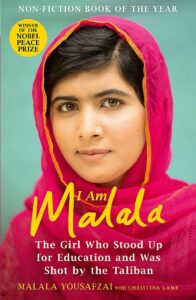
At its core, the book is a coming-of-age story set against a backdrop of escalating political and religious extremism. Malala meticulously details the gradual encroachment of the Taliban into her beloved Swat Valley, describing how their draconian edicts slowly stripped away fundamental freedoms, particularly for women and girls. Her father, Ziauddin Yousafzai, a passionate educator and outspoken activist, plays a pivotal role, instilling in Malala a profound love for learning and a courage to speak truth to power, even when it meant risking their lives.
Beyond the personal narrative, “I Am Malala” serves as an urgent call to action, highlighting the millions of children worldwide denied access to education due to poverty, conflict, and discrimination. It exposes the brutal realities of life under extremist rule, where fear and violence become daily companions, and the simple act of attending school becomes an act of defiance. The book culminates in the horrific assassination attempt on Malala by the Taliban in October 2012, an event that catapulted her story onto the international stage and galvanised support for her cause.
Ultimately, this memoir is more than just a recounting of events; it is a profound exploration of identity, faith, and the universal struggle for human dignity. Malala’s voice, clear and unwavering, resonates with an inspiring optimism, demonstrating that even in the darkest of times, hope and the pursuit of knowledge can prevail. It challenges readers to reflect on their own freedoms and responsibilities, urging them to champion the rights of others and to recognise education not merely as a privilege, but as a fundamental human right.
Key Takeaways
The Indomitable Power of Education
At its heart, the book is a profound testament to the transformative power of education. Malala’s narrative vividly illustrates how access to schooling can empower individuals, challenge oppressive ideologies, and foster societal progress.
For Malala and her father, education is not merely about acquiring knowledge; it is a fundamental human right, a pathway to freedom, and the most potent weapon against ignorance, poverty, and extremism. The Taliban’s targeted attacks on schools underscore their understanding of education’s threat to their control, inadvertently highlighting its immense power.
Courage in the Face of Extremism
Malala’s story is a powerful exploration of courage, both individual and collective. Her father, Ziauddin, embodies this courage by consistently speaking out against the Taliban’s atrocities, even when it meant risking his life and the safety of his family.
Malala herself, a young girl, demonstrates extraordinary bravery by refusing to be silenced, choosing to use her voice to advocate for what she believes in, despite direct death threats. The book showcases how even in the darkest times, individuals can stand up for their principles, inspiring others to resist oppression and fight for justice.
The Global Interconnectedness of Human Rights
The book transcends its specific Pakistani context to become a universal narrative about human rights. Malala’s story, initially a local struggle for education in Swat, quickly resonated globally, demonstrating how an attack on one girl’s right to learn is an attack on the rights of all.
Her journey from a remote valley to the international stage highlights the interconnectedness of global issues, urging readers to recognise their shared responsibility in advocating for human dignity, peace, and the fundamental rights of every child, irrespective of their geographical location or circumstances.
The Strength of Family and Cultural Identity
Beyond the political and social commentary, “I Am Malala” is also a deeply personal account of family bonds and cultural identity. Malala’s relationship with her father, who nurtured her intellect and activism, and her mother, who provided unwavering support, forms the emotional core of the narrative.
The book beautifully portrays Pashtun culture, its traditions, hospitality, and the strong sense of community, whilst also critically examining aspects like gender roles. This rich cultural backdrop provides context for Malala’s struggle and underscores what was lost and what was fought for when extremism threatened their way of life.
Chapter Breakdown
Part One: Before the Taliban
This initial section introduces readers to Malala’s origins, painting a vivid picture of her early life in Mingora, Swat Valley, Pakistan. She describes her birth as a source of initial disappointment for her family, who had hoped for a son, a cultural norm she later challenges. However, her father, Ziauddin Yousafzai, a poet and school owner, celebrates her arrival, naming her after the legendary Pashtun heroine, Malalai of Maiwand, and instilling in her from a young age a sense of self-worth and a passion for learning.
Malala recounts her idyllic childhood, filled with games with her brothers, the beauty of the Swat Valley’s mountains and rivers, and the vibrant community life. Crucially, she details her father’s tireless efforts to establish and run schools, often against significant financial and societal odds. His dedication to education, particularly for girls, becomes the foundational influence on Malala’s own burgeoning activism. This part establishes the cultural context of Pashtunwali, the Pashtun code of honour, and the deep-seated traditions that shape their lives, whilst also foreshadowing the impending changes that will disrupt their peaceful existence.
She describes her early fascination with learning, often sneaking into her father’s classes, and her competitive spirit in school. This section is essential for understanding the ‘normal’ life that the Taliban would later seek to destroy, highlighting the preciousness of the freedoms that would soon be threatened.
Key Points
- Introduction to Malala’s family, her birth, and the significance of her name, Malalai of Maiwand.
- Detailed portrayal of life in the Swat Valley, its natural beauty, and the Pashtun culture and traditions.
- The profound influence of Malala’s father, Ziauddin Yousafzai, an educator and activist, on her early development and passion for education.
- Description of Malala’s early schooling and her love for learning, establishing the foundation for her future advocacy.
Part Two: The Valley of Sorrows
Part Two chronicles the insidious rise of the Taliban in the Swat Valley and the gradual erosion of civil liberties. Malala describes how a radical cleric, Fazlullah, initially gained influence through illegal radio broadcasts, preaching a fundamentalist interpretation of Islam and condemning activities deemed ‘un-Islamic,’ such as music, television, and girls’ education. What began as seemingly harmless rhetoric soon escalated into a campaign of terror, marked by public floggings, beheadings, and the destruction of schools.
Malala vividly recounts the growing fear and uncertainty that gripped her community. Her father, Ziauddin, became one of the few outspoken critics of the Taliban, using his platform as a school owner and public speaker to challenge their ideology, often at great personal risk. Malala, inspired by her father’s courage, began to speak out herself, initially under a pseudonym, Gul Makai, for a BBC Urdu blog, documenting the daily realities of life under Taliban rule and the closure of girls’ schools.
This section powerfully illustrates the psychological impact of living under constant threat, the difficult choices families faced, and the devastating consequences of extremism on a society. It highlights the bravery of ordinary people who resisted, and the profound injustice of denying children, especially girls, their right to an education.
Key Points
- The emergence and growing influence of Fazlullah and the Taliban in the Swat Valley through illegal radio broadcasts.
- The systematic imposition of extremist laws, leading to the destruction of cultural sites, public executions, and the banning of girls’ education.
- Malala’s father, Ziauddin, emerges as a prominent voice against the Taliban, inspiring Malala to begin her own activism.
- Malala’s anonymous blogging for BBC Urdu, documenting the atrocities and the fight for education, marking her first public stand.
Part Three: Three Bullets, Three Girls
This part details the escalating threats against Malala and her family as her public profile grew. Having shed her pseudonym, Malala became an internationally recognised advocate for education, giving interviews and receiving awards. This visibility, however, made her a prime target for the Taliban, who viewed her as a symbol of Western influence and a challenge to their authority. The family lived under constant threat, with Malala’s father receiving death threats and Malala herself becoming increasingly aware of the danger she faced.
The narrative builds towards the fateful day of 9 October 2012. Malala describes the mundane details of her morning, travelling to school on the bus with her friends. The atmosphere of normalcy is abruptly shattered when a masked gunman boards the bus, asks “Who is Malala?”, and shoots her three times at close range. Two of her friends, Shazia and Kainat, are also injured in the attack.
Malala recounts the immediate aftermath from her perspective, the confusion and pain, before losing consciousness. This section is harrowing, depicting the brutal reality of extremist violence and the profound courage of a young girl who refused to be silenced, even when it meant paying the ultimate price.
Key Points
- Malala’s transition from anonymous blogger to internationally recognised advocate for girls’ education, increasing her visibility and risk.
- The constant threats and dangers faced by Malala and her family due to their outspoken opposition to the Taliban.
- The detailed account of the assassination attempt on 9 October 2012, when a Taliban gunman shot Malala and two of her friends.
- The immediate aftermath of the shooting, leading to Malala’s critical condition and the global shockwave it created.
Part Four: Between Life and Death
Part Four focuses on the critical period immediately following the shooting, detailing Malala’s fight for survival and her medical journey. After being rushed to local hospitals in Pakistan, her condition rapidly deteriorated, necessitating advanced medical care. The Pakistani government, recognising the gravity of the situation and the international attention it garnered, arranged for her to be airlifted to the Queen Elizabeth Hospital in Birmingham, England, a specialist trauma centre.
Malala describes her initial awakening in Birmingham, disoriented and unable to speak, grappling with the reality of her injuries and the unfamiliar surroundings. She recounts the complex surgeries she underwent, the slow process of recovery, and the emotional toll on her family, who were eventually able to join her. This section highlights the incredible medical efforts that saved her life and the immense support she received from around the world.
Crucially, it also explores her emotional and psychological recovery, as she comes to terms with the attack and her new reality. Despite the trauma, her resolve to continue her advocacy for education remains unbroken, demonstrating an extraordinary resilience and commitment to her cause.
Key Points
- Malala’s critical medical condition immediately after the shooting and the urgent need for specialised treatment.
- Her airlift to the Queen Elizabeth Hospital in Birmingham, UK, and the complex medical procedures that saved her life.
- The emotional and physical challenges of her recovery, including her initial disorientation and inability to communicate.
- The reunion with her family in Birmingham and the global outpouring of support and concern for her well-being.
Part Five: A Second Life
In the final part, Malala reflects on her ‘second life’ in Birmingham and her continued journey as a global advocate. Unable to return to Pakistan due to ongoing threats, her family establishes a new life in the UK. Malala describes the challenges of adapting to a new culture, language, and educational system, whilst simultaneously embracing her role as an international symbol of peace and education. She recounts her meetings with world leaders, her address to the United Nations, and the establishment of the Malala Fund, dedicated to ensuring every girl has the right to 12 years of free, safe, quality education.
This section culminates in her being awarded the Nobel Peace Prize in 2014, making her the youngest-ever recipient. She shares her feelings about this immense honour, not as a personal achievement, but as a recognition of the millions of voiceless children fighting for their right to education. Malala articulates her vision for a world where education is universal, and where girls are empowered to fulfil their potential.
“A Second Life” is a powerful conclusion, transforming a personal tragedy into a global triumph. It underscores Malala’s unwavering commitment to her cause, her profound gratitude for her survival, and her enduring hope for a brighter future, whilst never forgetting her roots and the plight of those still suffering in her homeland.
Key Points
- Malala’s adaptation to life in Birmingham, UK, including cultural adjustments and continuing her education.
- Her transformation into a global icon for education and peace, meeting world leaders and addressing international bodies like the United Nations.
- The establishment of the Malala Fund, dedicated to advocating for and investing in girls’ education worldwide.
- Her receipt of the Nobel Peace Prize in 2014, becoming the youngest laureate, and her continued dedication to her mission.
Conclusion
Malala Yousafzai’s “I Am Malala” is far more than a memoir; it is a vital historical document and a profound philosophical treatise on the enduring human spirit. Through Malala’s clear, articulate voice, readers are granted an unparalleled insight into the devastating impact of religious extremism on a vibrant culture and the courageous resistance mounted by ordinary people. The book masterfully balances the deeply personal narrative of a young girl’s life with the broader geopolitical forces that shaped her destiny, making it both an intimate portrait and a global call to conscience.
Its critical reception has been overwhelmingly positive, lauded for its unflinching honesty, its powerful message, and its ability to humanise a conflict often reduced to headlines. Critics have praised Malala’s eloquence and the book’s capacity to inspire, whilst also acknowledging the crucial role of Patricia McCormick in shaping the narrative for a Western audience without diluting Malala’s authentic voice. The book has been instrumental in elevating the discourse around girls’ education and human rights, transforming Malala from a victim into a potent symbol of hope and resilience.
In conclusion, “I Am Malala” stands as an essential read for anyone seeking to understand the complexities of modern global conflicts, the power of individual agency, and the universal importance of education. It is a testament to the idea that one voice, however young, can ignite a movement, and that even in the face of unimaginable adversity, the pursuit of knowledge and justice remains the most powerful force for change. Its legacy is not just in the story it tells, but in the millions it continues to inspire to stand up for what is right.