
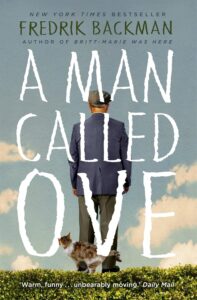
A Man Called Ove
by Fredrik Backman
“A curmudgeonly widower’s meticulously ordered world is upended by a boisterous new family, forcing him to confront his past and rediscover the profound beauty of human connection.”
Table of Contents
ToggleOverview
Fredrik Backman’s “A Man Called Ove” is a profoundly moving and often humorous exploration of grief, community, and the unexpected ways in which people can impact one another’s lives.
At its heart lies Ove, a sixty-year-old man defined by his rigid routines, unwavering principles, and an almost pathological aversion to anything that deviates from his meticulously ordered world.
He is the quintessential grumpy old man, perpetually exasperated by modern inefficiencies, rule-breakers, and the general incompetence he perceives in everyone around him.
Set in a quiet Swedish neighbourhood, the narrative unfolds through a series of present-day interactions interwoven with poignant flashbacks to Ove’s past.
These glimpses into his life reveal the origins of his stoicism and his deep-seated sense of duty, particularly his enduring love for his late wife, Sonja, whose absence has left an unfillable void. His daily attempts to join her in death are repeatedly, and comically, thwarted by the chaotic arrival of new neighbours.
The catalyst for change comes in the form of Parvaneh, a heavily pregnant, quick-witted Iranian woman, her clumsy husband Patrick, and their two young daughters. Their arrival, marked by a disastrous attempt to reverse a trailer, shatters Ove’s carefully constructed solitude and forces him into a series of reluctant, yet ultimately transformative, engagements with the world he had all but abandoned. Through these interactions, Backman masterfully peels back the layers of Ove’s gruff exterior, revealing a man of immense loyalty, integrity, and a surprising capacity for kindness.
The novel is a powerful testament to the idea that even the most seemingly unapproachable individuals harbour complex histories and profound vulnerabilities. It champions the quiet heroism of everyday people, the strength found in unexpected friendships, and the enduring power of love to shape a life, even after loss. Backman’s narrative style is characterised by its warmth, wit, and keen observational humour, making Ove’s journey from isolated misanthrope to an indispensable part of his community both heart-wrenching and ultimately uplifting.
Key Takeaways
The Power of Unexpected Connection
The novel powerfully illustrates how even the most isolated and seemingly unapproachable individuals can be profoundly transformed by unexpected human connections.
Ove’s journey from a solitary, grief-stricken widower to an indispensable part of his community highlights that genuine relationships, often forged through inconvenience and initial friction, are essential for healing and finding purpose.
It challenges the notion that one can truly thrive in isolation, demonstrating that our lives are enriched and given meaning through our interactions with others, regardless of how different they may seem.
Beyond the Surface: The Complexity of Character
Backman masterfully peels back the layers of Ove’s gruff exterior, revealing a man of immense integrity, loyalty, and a deep capacity for love and kindness.
The narrative encourages readers to look beyond initial impressions and stereotypes, suggesting that everyone carries a complex history and hidden vulnerabilities that shape their behaviour.
Ove’s story is a poignant reminder that a person’s outward demeanour often belies a rich inner world, and true understanding comes from empathy and a willingness to delve into their past and motivations.
Grief, Love, and the Enduring Legacy
At its core, “A Man Called Ove” is a profound meditation on grief and the enduring power of love. Ove’s despair is rooted in the unbearable loss of his wife, Sonja, whose memory continues to shape his every action.
The novel explores how love, even after death, can continue to influence a life, providing both immense pain and, eventually, a path to renewed purpose. It suggests that the legacy we leave is not just in our accomplishments, but in the love we give, the connections we forge, and the quiet ways we impact the lives of those around us, even long after we are gone.
Chapter Breakdown
Chapter 1: The Curmudgeon’s Routine and the Arrival of Chaos
The story opens by firmly establishing Ove’s character: a man of strict principles, unwavering routines, and an almost militant adherence to rules and order. He patrols his neighbourhood with the vigilance of a sentry, ensuring gates are closed, rubbish is sorted correctly, and cars are parked according to regulations. His life is a carefully constructed edifice of habit, designed to fill the immense void left by the death of his beloved wife, Sonja, six months prior. His primary objective, however, is to end his own life and rejoin her, a goal he pursues with the same meticulous planning he applies to everything else.
His first attempt at suicide, by hanging, is abruptly interrupted by the arrival of his new neighbours: Parvaneh, a heavily pregnant, assertive woman; her somewhat inept husband, Patrick; and their two young daughters. Their disastrous attempt to reverse a trailer into their driveway, culminating in the destruction of Ove’s letterbox, forces him into reluctant interaction. This initial encounter sets the tone for their relationship, with Parvaneh’s directness and lack of deference to Ove’s grumpiness immediately challenging his carefully guarded solitude.
This chaotic intrusion marks the beginning of the end for Ove’s solitary existence. What starts as an annoyance quickly escalates into a series of demands on his time and expertise, from fixing a bicycle to providing a lift to the hospital. Each interruption, though initially met with exasperation, subtly chips away at his resolve to isolate himself, drawing him back into the messy, unpredictable world of human connection.
Key Points
- Ove’s character is introduced as a rigid, rule-bound widower whose life is meticulously ordered to cope with grief and prepare for suicide.
- His initial suicide attempt is comically thwarted by the arrival of his new, boisterous neighbours, Parvaneh and her family, who immediately disrupt his peace.
- The neighbours’ persistent need for Ove’s practical skills forces him into reluctant interactions, slowly pulling him out of his self-imposed isolation.
Chapter 2: Unveiling the Past: Ove’s Formative Years
As Ove’s present-day interactions unfold, Backman masterfully interweaves flashbacks that illuminate the origins of his character and his unwavering principles. We learn of Ove’s childhood, marked by the early death of his mother and the profound influence of his quiet, principled father, a railway worker who taught him the value of hard work, integrity, and doing things properly. His father’s sudden death, caused by a train accident, leaves a young Ove orphaned and alone, forcing him to rely solely on his own resourcefulness and a deep-seated sense of responsibility.
These formative experiences forge the stoic, self-reliant man we meet in the present. We witness his early career on the railway, his meticulous approach to engineering, and his unwavering belief in quality and craftsmanship. A pivotal moment arrives when he meets Sonja, a vibrant, intelligent, and vivacious woman who is the antithesis of his own reserved nature. Their meeting on a train platform is an instant connection, and Sonja quickly becomes the centre of his universe, the ‘colour’ in his otherwise black-and-white world.
Their love story is depicted with tender detail, showcasing how Sonja broadened Ove’s horizons, encouraged his passions, and provided him with a profound sense of belonging and purpose. Her love was the anchor that grounded him, and her intelligence and warmth complemented his practicality. The flashbacks reveal that much of Ove’s present-day rigidity and despair stems from the unbearable loss of this irreplaceable connection, explaining why he feels his life truly ended with hers.
Key Points
- Flashbacks reveal Ove’s childhood, shaped by the early loss of his mother and the principled influence of his railway worker father.
- His father’s death leaves Ove orphaned, fostering his self-reliance, integrity, and meticulous approach to life and work.
- The profound love story between Ove and his late wife, Sonja, is detailed, showing how her vibrant personality brought colour and purpose to his life, making her loss the root of his current despair.
Chapter 3: Forging Unlikely Bonds and Expanding the Community
As the story progresses, Ove finds himself increasingly entangled in the lives of his neighbours, often against his will. Parvaneh, with her relentless good humour and refusal to be intimidated, becomes a central figure, effectively adopting Ove as an honorary, if perpetually grumpy, grandfather figure. She sees beyond his gruff exterior, recognising the good man beneath, and consistently challenges his isolation, bringing him food, asking for help, and even entrusting him with her children.
Beyond Parvaneh’s family, Ove’s orbit expands to include other neighbourhood characters: Rune, his former best friend turned rival, now suffering from advanced Alzheimer’s, and Rune’s wife, Anita, who is fighting to keep him out of state care; Jimmy, the overweight, socially awkward young man who lives next door; and Mirsad, a young gay man who has been disowned by his family and seeks refuge and practical assistance from Ove. Each interaction, initially a source of irritation for Ove, gradually reveals his deep-seated loyalty and compassion.
Ove’s practical skills and unwavering sense of justice prove invaluable to his burgeoning community. He fixes things, offers advice, and stands up for those he cares about, even if it means confronting bureaucracy or challenging local authorities. These acts of service, though performed with characteristic grumbling, slowly begin to heal his grief and remind him of the purpose he once found in helping others and maintaining order, albeit now on a more human, less rigid, scale.
Key Points
- Ove’s relationship with Parvaneh deepens, as she consistently sees past his grumpiness and draws him into her family’s life, becoming a catalyst for his reintegration.
- He forms unexpected bonds with other neighbours, including his estranged friend Rune, the shy Jimmy, and the ostracised Mirsad, revealing his underlying loyalty and compassion.
- Ove’s practical skills and strong sense of justice make him an indispensable, albeit reluctant, pillar of his community, slowly helping him to overcome his grief and find new purpose.
Chapter 4: Confronting Bureaucracy and the Power of Advocacy
A significant thread running through the latter half of the novel involves Ove’s fierce battles against ‘the Men in White Shirts’ – the faceless, bureaucratic figures representing various government and social services. These encounters are not merely minor annoyances but represent a fundamental clash between Ove’s old-fashioned values of common sense, personal responsibility, and practical solutions, and the perceived inefficiency, coldness, and over-regulation of modern society. His most poignant struggle is on behalf of Rune and Anita.
When ‘the Men in White Shirts’ attempt to forcibly remove Rune, who is suffering from Alzheimer’s, from his home and place him in a state-run facility, Ove springs into action. This fight is deeply personal for Ove, as it mirrors his own feelings of helplessness and loss, and he sees it as an injustice against his old friend and Anita. He mobilises the entire neighbourhood, using his practical knowledge, his stubborn resolve, and his surprising ability to inspire others to resist the authorities.
This advocacy highlights Ove’s unwavering loyalty and his commitment to those he cares about. It demonstrates that beneath the layers of cynicism and grumpiness lies a man who will fight tooth and nail for what he believes is right. The community, once wary of Ove, rallies around him, showcasing the power of collective action and the strength of neighbourhood bonds when faced with external threats. This battle, though fraught with tension, ultimately reinforces Ove’s place within his community and solidifies his transformation from an isolated individual to a vital, protective figure.
Key Points
- Ove engages in fierce battles against ‘the Men in White Shirts’, symbolising his clash with modern bureaucracy and its perceived inefficiencies.
- His most significant fight is to prevent his old friend Rune, suffering from Alzheimer’s, from being forcibly removed from his home by social services.
- This advocacy reveals Ove’s deep loyalty and sense of justice, uniting the neighbourhood and solidifying his role as a protective and indispensable member of the community.
Chapter 5: The Legacy of Love and a Quiet Departure
As the seasons turn and years pass, Ove’s transformation becomes complete, though never entirely shedding his characteristic grumbling. He remains the neighbourhood’s unofficial handyman, advisor, and moral compass, deeply integrated into the lives of Parvaneh’s growing family and the wider community. His attempts at suicide cease, replaced by a quiet acceptance of his role and a renewed sense of purpose derived from his connections. He learns to embrace the messiness of life, finding joy in the small, everyday interactions and the love he receives from his adopted family.
The narrative culminates in Ove’s peaceful, natural death. He is found by Parvaneh, having passed away quietly in his sleep, a testament to a life lived fully, right up to its natural conclusion. His death is not a tragic event but a gentle transition, a reunion with Sonja that he had long yearned for, but one that came on life’s own terms, surrounded by the love he had cultivated. The community’s reaction to his passing underscores the profound impact he had on their lives.
His funeral is attended by everyone he had touched, a diverse collection of individuals who had once seen him as merely a grumpy old man but now recognise him as a beloved, irreplaceable figure. The final scenes reflect on Ove’s legacy: not just the things he fixed or the rules he enforced, but the quiet acts of kindness, the unwavering loyalty, and the profound love he shared. He leaves behind a community that is stronger, more connected, and forever changed by the man called Ove, proving that even the most seemingly ordinary lives can leave an extraordinary imprint.
Key Points
- Ove’s transformation is complete; he finds purpose and contentment in his community connections, ceasing his attempts at suicide.
- He passes away peacefully in his sleep, a natural and quiet departure, signifying a reunion with Sonja on life’s own terms.
- Ove’s funeral is a testament to his profound impact, attended by all he touched, cementing his legacy as a beloved and indispensable figure in the neighbourhood.
Conclusion
Fredrik Backman’s “A Man Called Ove” is a literary triumph, a novel that manages to be both profoundly heartbreaking and wonderfully uplifting. It is a masterclass in character development, taking a seemingly archetypal ‘grumpy old man’ and imbuing him with such depth, history, and humanity that he becomes utterly unforgettable. Backman’s prose is sharp, witty, and deeply empathetic, allowing readers to laugh at Ove’s curmudgeonly antics while simultaneously feeling the profound ache of his grief and the warmth of his burgeoning connections.
The book’s critical reception has been overwhelmingly positive, lauded for its unique blend of humour and pathos, its insightful observations on human nature, and its powerful message about community and compassion. It resonated deeply with audiences worldwide, becoming a bestseller and inspiring a successful film adaptation, testament to the universal appeal of its themes. Backman’s ability to craft a narrative that is both specific to a Swedish setting and universally relatable is a hallmark of his talent.
Ultimately, “A Man Called Ove” is more than just a story about an old man; it is a celebration of life’s messy, unpredictable beauty, a testament to the quiet heroism found in everyday acts of kindness, and a powerful reminder that even in the deepest sorrow, there is always the potential for connection and renewal. It leaves the reader with a profound sense of warmth, a renewed appreciation for the people in their own lives, and the enduring belief that every life, no matter how seemingly ordinary, holds extraordinary significance. It is a truly exceptional piece of contemporary fiction, deserving of its widespread acclaim.